
Why Suicide Prevention Matters
Suicide is a pressing global issue, with the World Health Organization (WHO) estimating that more than 720,000 individuals die by suicide every year. Each suicide profoundly affects countless individuals, including family members, friends, and entire communities, with an estimated impact of approximately 135 people for every fatal incident. This widespread emotional and social repercussion highlights the gravity of the situation.
Estimation by World Health Organization
Individuals Who Die by Suicide Each Year
0+Affected Individuals in Each Fatal Incident
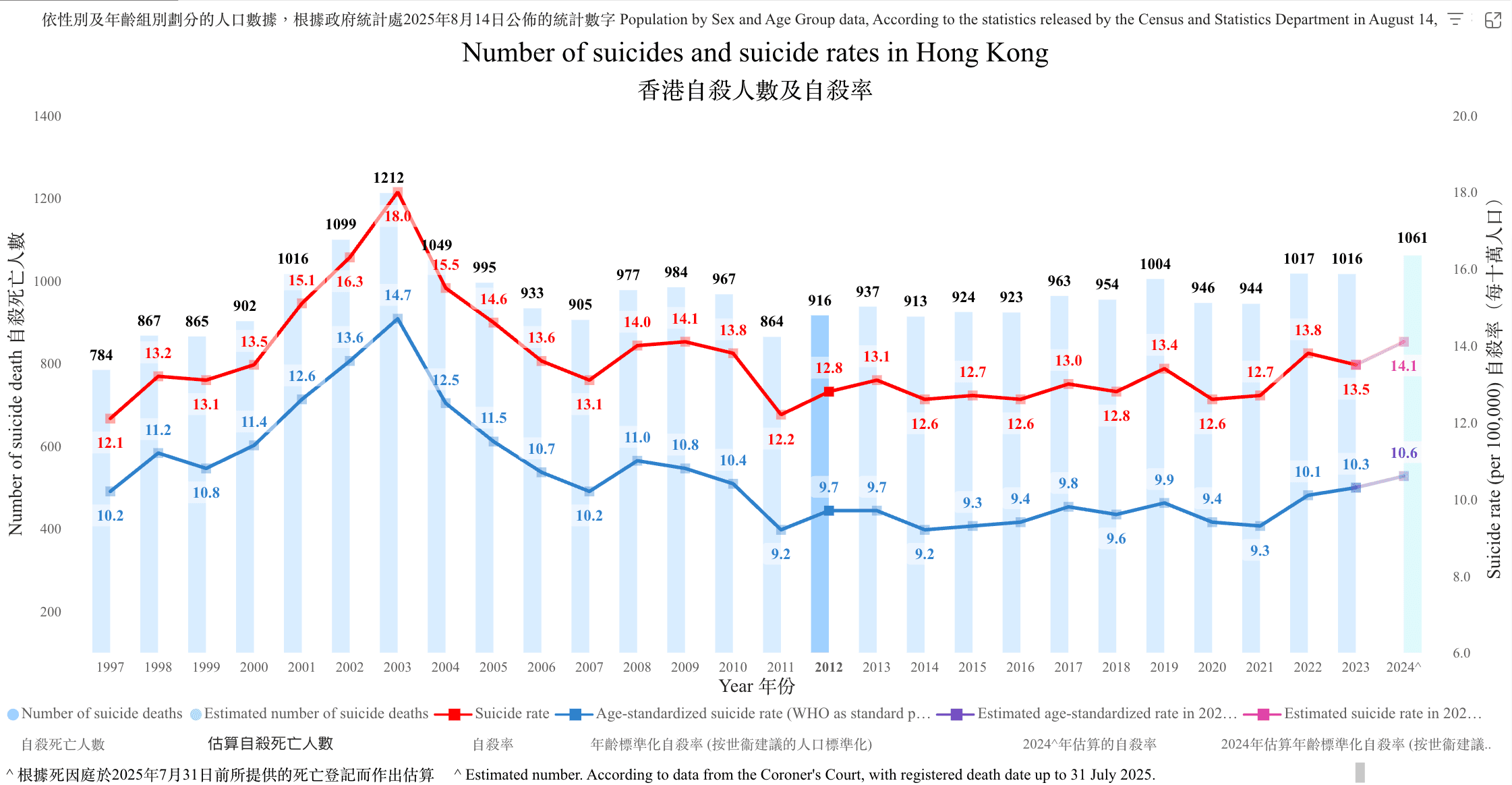
0Narrowing down to Hong Kong, in 2023, our center's statistics indicate that approximately 1,024 individuals died by suicide, translating to nearly three people lost each day. This alarming figure underscores the urgent need to address suicide as a critical public health issue.
Research shows that timely intervention can significantly reduce suicide rates . In the U.S., for instance, it is estimated that about 29,000 lives could be saved annually if crisis counselors effectively addressed the needs of suicidal callers. Yet, approximately 25% of individuals who contact crisis hotlines are suicidal, and many do not receive the necessary support. Those who successfully connect with professionals often report feeling less depressed, less suicidal, and more hopeful after their interactions, highlighting the profound impact that timely intervention can have on mental health outcomes. This emphasizes the critical need to prioritize prompt support and intervention efforts.
Moreover, studies indicate that up to 80% of individuals who die by suicide show warning signs beforehand, underscoring the urgency of intervening when these signals are present . Recognizing and acting on these warning signs is essential, as it represents a crucial opportunity to offer help and potentially save lives.
Suicide prevention is a shared responsibility, and everyone can contribute. You don’t need to be a mental health professional to recognize the signs of someone in distress. By participating in LivingWorks safeTALK and ASIST, you can learn how to respond effectively and connect individuals with trained gatekeepers or professional resources.

Shared Responsibility
Suicide prevention is a collective effort, everyone can play a role, regardless of their mental health background

Effective Training
Programs like LivingWorks safeTALK and ASIST teach participants to recognize distress signs and respond appropriately

Empowerment and Awareness
Increase awareness enables individuals to connect those in need with trained professionals, enhancing community support.
These training programs not only increase awareness and sensitivity to the signs of suicide but also empower you to make a positive impact in your community. With higher awareness, it becomes easier to save lives and refer those in need to appropriate resources at an earlier stage. Together, we can create a supportive environment and help prevent suicide.